
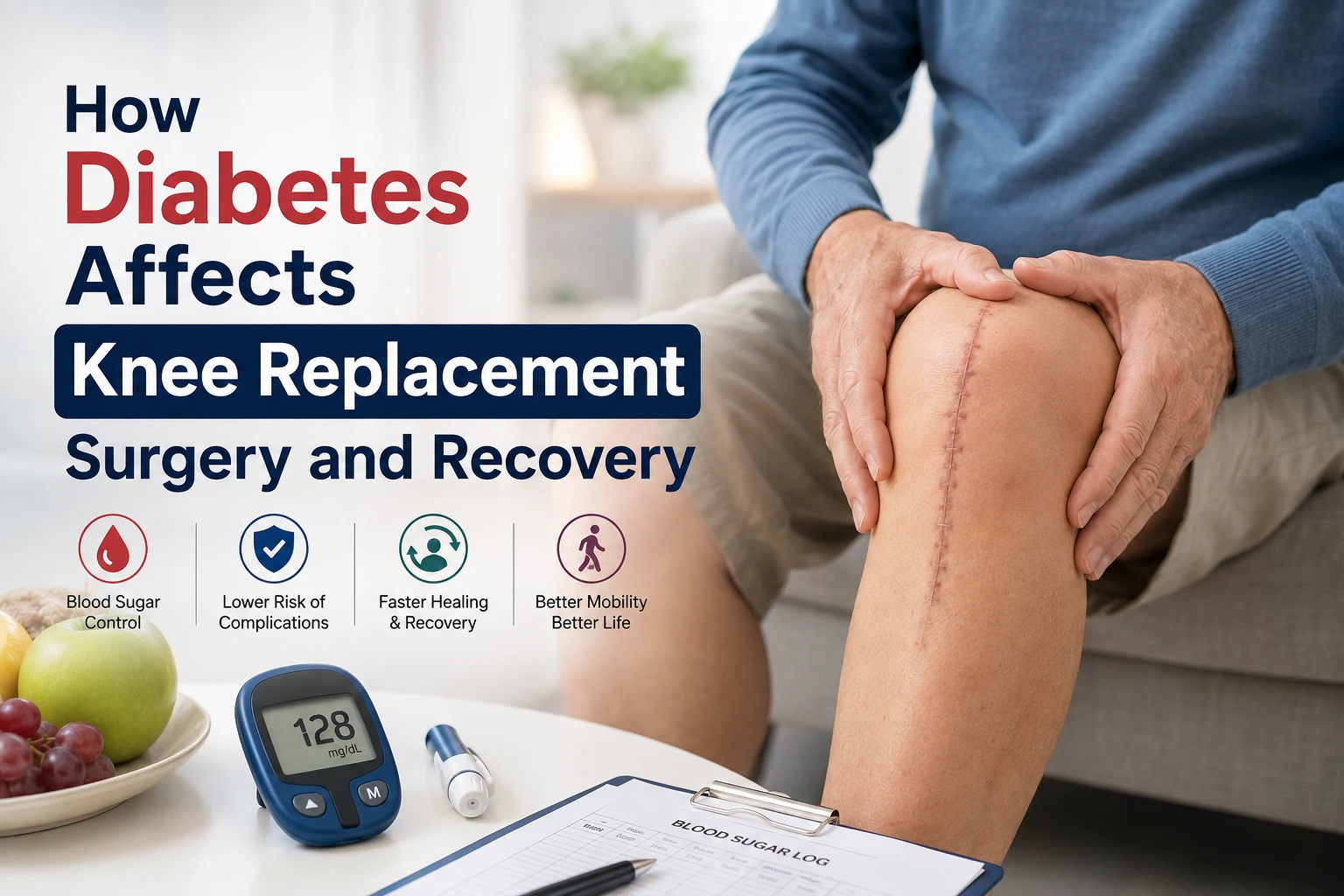
How Diabetes Affects Knee Replacement Surgery and Recovery
If you have diabetes and are considering knee replacement surgery, you may wonder whether high blood sugar can affect the operation or how quickly you recover. Diabetes does not automatically prevent you from having a total knee replacement, but it can increase the risk of certain complications, particularly when blood glucose is poorly controlled. The good news is that many of these risks can be reduced through careful preparation, diabetes management, appropriate surgical planning and consistent rehabilitation.
Recent evidence supports taking diabetes seriously before and after knee replacement. A 2025 overview of systematic reviews found that people with diabetes undergoing total knee arthroplasty had higher risks of periprosthetic joint infection, deep vein thrombosis and hospital readmission than people without diabetes.
Does Diabetes Affect Knee Replacement Surgery?
Yes, diabetes can affect knee replacement surgery and recovery, especially when blood sugar is poorly controlled. High glucose levels can make it harder for the body to fight infection and heal the surgical wound.
Surgery can also temporarily raise blood sugar because of the body’s stress response. The American Diabetes Association’s 2026 guidelines recommend a preoperative A1C below 8% for elective surgery when appropriate, along with perioperative blood glucose monitoring.
Diabetes does not mean you cannot have a successful knee replacement. However, research shows a higher risk of complications such as periprosthetic joint infection. One review of 120,754 knees found infection rates of 1.9% in patients with diabetes compared with 1.2% in those without diabetes.
Your risk also depends on factors such as HbA1c, kidney and heart health, weight, medications and overall fitness. Good diabetes management before and after surgery can help support safer recovery.
How Diabetes Increases the Risk of Infection After Knee Replacement
Knee replacement involves placing an artificial joint inside the body. Although infection after knee replacement is uncommon overall, it can be a serious complication when it occurs because bacteria can infect tissues surrounding the implant.
Diabetes is associated with a higher risk of infection. A systematic review and meta-analysis involving 120,754 knees found that infection occurred in about 1.9% of knees among patients with diabetes compared with 1.2% among patients without diabetes. The researchers calculated an approximately 1.84-times higher infection risk in people with diabetes.
More recent evidence continues to support this association. A 2025 meta-analysis of 39 studies reported higher odds of periprosthetic joint infection and revision surgery among patients with diabetes after total knee arthroplasty.
However, these numbers describe populations, not an individual’s exact risk. Diabetes is only one factor among several.
Why High Blood Sugar Can Increase Infection Risk
High blood glucose can affect immune-system function and circulation. Diabetes can also damage nerves and blood vessels over time, particularly when glucose has been poorly controlled for years. These changes can make it harder for the body to respond to infection and heal injured tissue.
The CDC notes that diabetes can impair the body’s ability to fight infections and that wounds may take longer to heal. This is why blood sugar control before knee replacement is an important part of surgical preparation.
Diabetes and Wound Healing After Knee Replacement
Another concern is delayed wound healing after knee replacement.
After surgery, the incision needs to heal properly before the skin and deeper tissues fully recover. Poorly controlled diabetes can slow this process. The American Academy of Orthopaedic Surgeons (AAOS) specifically notes that uncontrolled diabetes can slow healing of bones, muscles, tendons and skin while increasing infection risk.
A slow-healing wound does not necessarily mean the knee replacement has failed. However, persistent drainage, increasing redness, swelling, warmth or worsening pain should not be ignored because these can indicate infection or another postoperative problem.
What HbA1c Level Is Safe for Knee Replacement?
There is no universal HbA1c value that guarantees a complication-free knee replacement.
For elective surgery, the American Diabetes Association recommends an A1C goal below 8% within three months of surgery, with an individualized risk-benefit assessment. It also recommends maintaining blood glucose around 100–180 mg/dL (5.6–10.0 mmol/L) during the perioperative period.
Importantly, HbA1c should not be viewed in isolation. It reflects average blood glucose over roughly the previous two to three months, whereas glucose levels can change considerably around surgery.
Recent research has also questioned whether HbA1c alone is sufficient to predict infection after joint replacement. A 2025 study noted that an optimal preoperative HbA1c threshold for predicting periprosthetic joint infection has not been firmly established.
Your surgeon and diabetes-care team may therefore consider your recent glucose readings, HbA1c, medications, kidney function, cardiovascular health and other risk factors together.
How Diabetes Can Affect Recovery After Knee Replacement
The recovery after knee replacement with diabetes can be similar to recovery in other patients, but closer monitoring may be required.
Several factors can influence recovery:
- Blood glucose control
- Wound healing
- Infection prevention
- Muscle strength before surgery
- Physical activity
- Body weight and nutritional status
- Kidney and cardiovascular health
- Ability to participate in physiotherapy
- Other diabetes-related complications
Diabetes itself does not mean that rehabilitation will fail. In fact, appropriate physical therapy remains an important part of restoring knee movement, strength and function.
The difference is that your medical team may monitor you more closely and adjust treatment as your activity, appetite and glucose levels change.
Blood Sugar Management Before and After Knee Replacement
Managing diabetes is an important part of preparing for knee replacement surgery. Blood glucose can rise around the time of surgery because the body responds to surgical stress. If blood sugar remains too high, it may increase the risk of infection and other postoperative complications. The American Diabetes Association (ADA) recommends an individualized preoperative A1C goal of below 8% within three months of elective surgery, where appropriate, and recommends monitoring blood glucose before, during and after surgery.
Before surgery, your healthcare team may review:
1. HbA1c and recent blood glucose levels
HbA1c gives your doctor an idea of your average blood sugar control over the previous few months. Recent glucose readings can provide additional information about how stable your levels are.
2. Diabetes medications
Some diabetes medicines may need to be temporarily adjusted before surgery. For example, the ADA recommends stopping SGLT2 inhibitors several days before elective surgery because of the risk of diabetic ketoacidosis. The approach to GLP-1-based medicines depends on factors such as the medication, gastrointestinal symptoms, diabetes control and the type of surgery and anaesthesia.
3. Kidney and heart health
Diabetes can affect the kidneys and is associated with cardiovascular disease. Your doctor may therefore assess these areas as part of your overall fitness for surgery.
4. Nutrition, weight and physical condition
Adequate nutrition supports healing and recovery. Your surgeon may also consider your weight, muscle strength and activity level when planning your surgery and rehabilitation.
Diabetes and Physical Therapy After Knee Replacement
Physiotherapy after knee replacement is essential for restoring movement and strength. Your therapist may gradually increase walking, knee exercises, strengthening and functional activities according to your progress.
For someone with diabetes, there is an additional reason to follow the rehabilitation plan carefully: increasing activity can change blood glucose levels.
Your diabetes team may therefore recommend more frequent glucose monitoring during periods when your activity level changes.
Do not exercise through unusual symptoms simply because you want to recover faster. Follow your surgeon and physiotherapist’s instructions, especially during the early postoperative period.
What Can Patients Do to Improve Knee Replacement Recovery With Diabetes?
You cannot eliminate every surgical risk, but you can take practical steps to improve your chances of a smooth recovery.
Before Surgery
- Work with your doctor to improve blood glucose control.
- Complete recommended blood tests and medical evaluations.
- Tell the surgical team about every prescription, supplement and diabetes medication.
- Follow instructions regarding fasting and medication adjustments.
- Maintain appropriate physical activity before surgery if your doctor permits.
- Address active infections or skin problems before elective surgery.
- Arrange help at home for the early recovery period.
After Surgery
- Monitor blood glucose as instructed.
- Take medications exactly as prescribed.
- Keep the incision clean and follow wound-care instructions.
- Attend physiotherapy appointments.
- Follow your recommended walking and exercise plan.
- Maintain adequate nutrition and hydration.
- Attend follow-up appointments.
- Report unusual wound changes promptly.
The AAOS advises patients to seek medical attention for symptoms such as persistent fever, increasing redness or swelling around the wound, wound drainage or increasing knee pain.
When Should You Contact Your Doctor After Knee Replacement?
Some pain, swelling and stiffness are expected after knee replacement. However, certain symptoms require prompt medical assessment.
Contact your surgical team if you notice:
- Increasing redness around the incision
- New or persistent wound drainage
- Increasing warmth or swelling
- Fever or chills
- Worsening pain rather than gradual improvement
- Significant calf pain or swelling
- Sudden shortness of breath or chest pain
These symptoms do not automatically mean you have an infection or blood clot, but they should be evaluated promptly.
If You Are Travelling or Relocating for Knee Replacement
Some patients travel to another city or country for knee replacement surgery. If you have diabetes, planning your medical care becomes especially important.
Before travelling, make sure your treating team has access to your recent HbA1c results, medication list, glucose records and relevant medical reports. If you are staying away from home during recovery, arrange physiotherapy, diabetes follow-up and access to urgent medical care.
Do not assume that your postoperative diabetes-management plan will remain unchanged. Changes in diet, activity, medication timing and recovery can all affect glucose levels.
If you are travelling internationally for treatment, discuss the timing of travel with your surgeon. Long periods of sitting during travel may also be relevant because blood clots are a recognized complication after knee replacement.
Can People With Diabetes Have a Successful Knee Replacement?
Yes. Having diabetes does not automatically mean you cannot have successful knee replacement surgery.
The important issue is individualized risk management. Diabetes is associated with increased postoperative risks, but those risks vary considerably between patients.
A 2025 study examining five-year periprosthetic joint infection rates found substantial variation depending on a patient’s clinical profile, including age, sex, weight and vascular disease.
The goal is therefore not simply to ask, “Do I have diabetes?” Instead, your medical team should consider how well the condition is controlled and what other health factors are present.
Frequently Asked Questions
1. Can a person with diabetes undergo knee replacement surgery?
Yes. Diabetes does not automatically prevent knee replacement. Your surgeon will consider blood glucose control, HbA1c, kidney and cardiovascular health, medications and other individual risk factors.
2. Does diabetes increase the risk of infection after knee replacement?
Yes. Research shows that people with diabetes have a higher risk of infection after total knee arthroplasty than people without diabetes.
3. What HbA1c is recommended before knee replacement?
The 2026 American Diabetes Association Standards of Care recommend an A1C goal below 8% within three months of elective surgery when appropriate, with individualized assessment.
4. Can high blood sugar delay wound healing after knee replacement?
Yes. Poorly controlled diabetes can slow healing of skin and other tissues and can increase infection risk.
5. Will diabetes make knee replacement recovery longer?
Not necessarily for every patient. Recovery varies according to glucose control, overall health, wound healing, physical condition and rehabilitation progress. Diabetes may require closer monitoring.
6. Should I stop my diabetes medication before knee replacement?
Do not change or stop diabetes medication without medical advice. Some medicines may need to be temporarily withheld or adjusted before surgery, depending on the medication and your individual circumstances.
7. Can I do physiotherapy after knee replacement if I have diabetes?
Yes. Physiotherapy is an important part of recovery. However, changes in physical activity can affect blood glucose, so follow your healthcare team’s recommendations for glucose monitoring and exercise.
8. Does diabetes increase the risk of blood clots after knee replacement?
Evidence suggests that diabetes is associated with a higher risk of deep vein thrombosis after total knee arthroplasty. A 2025 overview of systematic reviews reported a 45% higher risk of DVT in people with diabetes.
9. What signs of infection should I watch for after knee replacement?
Watch for increasing redness, swelling, warmth, wound drainage, fever, chills or worsening knee pain. Contact your surgical team promptly if these occur.
10. Can good diabetes control improve my chances of recovery?
Good glucose management is an important part of preparing for surgery and reducing avoidable complications. However, it cannot eliminate all surgical risks, so overall medical optimization and postoperative care remain important.
Key Takeaway
Diabetes can affect knee replacement surgery and recovery by increasing the risk of infection, wound-healing problems and certain medical complications, particularly when glucose is poorly controlled. However, diabetes does not automatically rule out knee replacement.
Preparing in advance, optimizing blood glucose, reviewing medications, managing other medical conditions and following the rehabilitation program can help reduce avoidable risks. Current guidance supports individualized assessment rather than relying on a single HbA1c number to determine whether surgery is appropriate.
If you are considering knee replacement and have diabetes, discuss your individual risks with your orthopaedic surgeon and diabetes-care team before making a surgical decision.