
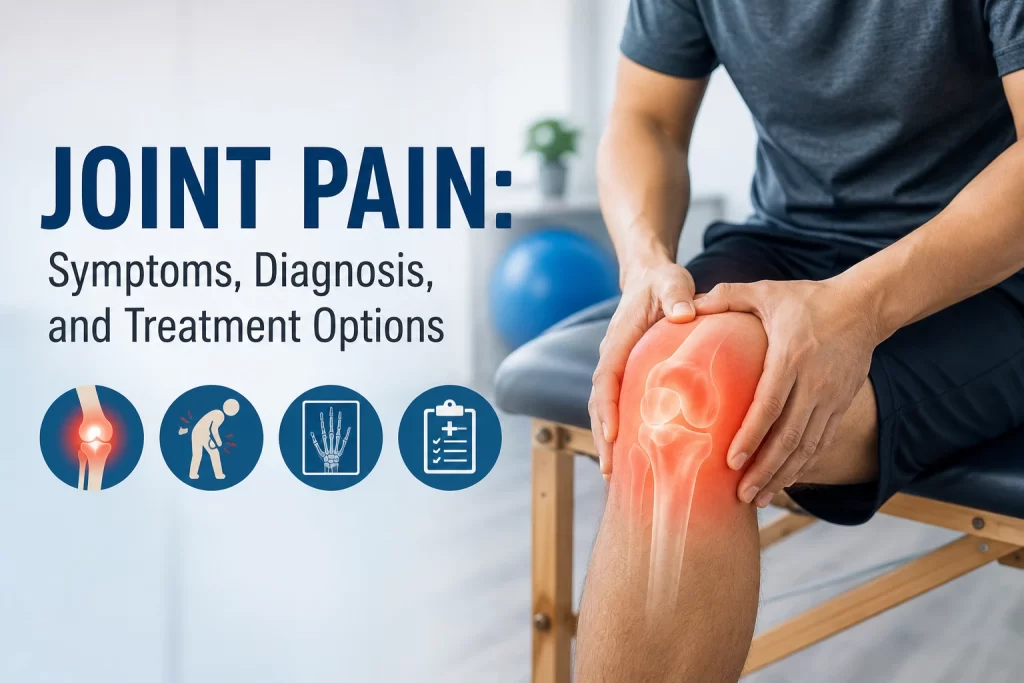
Joint Pain: Symptoms, Diagnosis, and Treatment Options
Joint pain can make even the simplest daily activities difficult. Walking, climbing stairs, lifting objects, or even getting out of bed may become uncomfortable when your joints are affected. While occasional joint discomfort can result from overuse or minor injuries, persistent pain may indicate an underlying condition that requires medical attention.
Understanding the causes, symptoms, and available treatment options for joint pain is the first step toward long-term relief. Early diagnosis and the right treatment plan can help reduce pain, improve mobility, and prevent further joint damage.
What Is Joint Pain?
Joint pain (also known as arthralgia) is pain, discomfort, or stiffness in or around one or more joints. A joint is the point where two bones meet, allowing movement and providing support to the body.
Joint pain is a symptom rather than a disease and can result from a wide range of conditions, including injuries, osteoarthritis, autoimmune diseases such as rheumatoid arthritis, infections, or overuse. While it can affect people of any age, it becomes more common with increasing age due to natural wear and tear of the joints.
Symptoms may develop suddenly after an injury or gradually over time. Depending on the underlying cause, joint pain may be mild and short-lived or persistent enough to interfere with daily activities and mobility.
The joints most commonly affected include:
- Knees
- Shoulders
- Hips
- Ankles
- Wrists
- Fingers and hands
- Elbows
- Neck and lower back joints
Common Symptoms of Joint Pain
The symptoms of joint pain can vary depending on the underlying cause, whether it is an injury, arthritis, infection, or an inflammatory condition. Some people experience mild discomfort that comes and goes, while others may have persistent pain that affects daily activities.
Common symptoms include:
1. Pain During Movement
Pain may occur when walking, climbing stairs, bending, lifting objects, or using the affected joint. Depending on the cause, the pain may improve with rest or continue even when the joint is not being used.
2. Joint Stiffness
Stiffness is often more noticeable after periods of inactivity, such as waking up in the morning or sitting for a long time. Morning stiffness that lasts longer than 30–60 minutes is more commonly associated with inflammatory conditions such as rheumatoid arthritis, whereas stiffness from osteoarthritis usually improves within about 30 minutes of movement.
3. Swelling
Inflammation or excess fluid within the joint can cause swelling, making the joint appear enlarged and feel uncomfortable or tight. Swelling may develop gradually or occur suddenly, depending on the underlying condition.
4. Redness and Warmth
A joint that appears red and feels warm to the touch may indicate active inflammation or, less commonly, a joint infection. If these symptoms are accompanied by fever or severe pain, prompt medical assessment is recommended.
5. Reduced Range of Motion
Joint pain may make it difficult to fully bend, straighten, or rotate the affected joint. Reduced mobility can interfere with everyday activities such as walking, dressing, or reaching overhead.
6. Clicking, Popping, or Grinding Sensations
Some people notice clicking, popping (crepitus), or grinding sounds when moving a joint. These sounds are not always a sign of disease and may occur in healthy joints. However, when accompanied by pain, swelling, or reduced function, they may be associated with conditions such as osteoarthritis or cartilage damage.
7. Weakness or Joint Instability
Pain, inflammation, or injury can reduce the strength of the muscles supporting a joint, leading to weakness or a feeling that the joint may “give way.” This is commonly seen after ligament injuries or in advanced joint disease.
Common Causes of Joint Pain
Joint pain can develop due to injury, inflammation, infection, or long-term wear and tear. Determining the underlying cause is essential because treatment varies depending on the diagnosis.
1. Osteoarthritis
Osteoarthritis is the most common cause of chronic joint pain, particularly in older adults. It occurs when the cartilage that cushions the ends of bones gradually breaks down, causing pain, stiffness, swelling, and reduced joint movement. Weight-bearing joints such as the knees, hips, and spine are most commonly affected.
2. Rheumatoid Arthritis
Rheumatoid arthritis is an autoimmune disease in which the immune system mistakenly attacks the lining of the joints (synovium). It typically affects multiple joints on both sides of the body and can lead to persistent inflammation, pain, swelling, and progressive joint damage if left untreated.
3. Joint Injuries
Acute injuries such as ligament sprains, tendon injuries, cartilage damage, meniscus tears, fractures, or joint dislocations can cause immediate joint pain. In some cases, these injuries may also increase the risk of developing osteoarthritis later in life.
4. Bursitis
Bursitis is the inflammation of the bursae—small fluid-filled sacs that reduce friction between bones, tendons, and muscles. It commonly affects the shoulder, elbow, hip, and knee, causing pain that often worsens with movement or prolonged pressure.
5. Tendinitis
Tendinitis refers to inflammation or irritation of a tendon, usually resulting from repetitive movements, overuse, or sudden increases in physical activity. It commonly affects the shoulder, elbow, wrist, knee, or ankle.
Gout
Gout is a form of inflammatory arthritis caused by the accumulation of uric acid crystals within a joint. It often presents as sudden, severe pain accompanied by redness, swelling, warmth, and tenderness, most commonly affecting the base of the big toe.
Joint Infections
A bacterial infection within a joint, known as septic arthritis, is a medical emergency. Symptoms typically include severe joint pain, swelling, warmth, fever, and an inability to move the affected joint. Prompt treatment is essential to prevent permanent joint damage.
Autoimmune and Connective Tissue Disorders
Conditions such as systemic lupus erythematosus (lupus), psoriatic arthritis, and ankylosing spondylitis can cause inflammation in one or multiple joints. These conditions require specialist assessment and long-term management.
Risk Factors for Joint Pain
Several factors can increase the risk of developing joint pain or joint-related conditions. Some cannot be changed, while others are linked to lifestyle or occupational factors.
These include:
- Increasing age, as joint cartilage naturally wears down over time
- Previous joint injuries, including fractures, ligament tears, or cartilage damage
- Obesity, which places additional stress on weight-bearing joints such as the knees and hips
- Family history of conditions like osteoarthritis or rheumatoid arthritis
- Repetitive joint use, particularly in occupations or sports involving frequent kneeling, lifting, or repetitive movements
- Physically demanding occupations that place ongoing stress on the joints
- Autoimmune diseases, such as rheumatoid arthritis or lupus
- Female sex, which is associated with a higher risk of certain joint disorders, including rheumatoid arthritis and osteoarthritis of the hands and knees
- Physical inactivity, which can weaken the muscles that support the joints and reduce joint flexibility
When Should You See a Doctor?
While mild joint pain caused by minor strains or overuse may improve with rest, persistent or severe symptoms should be assessed by a healthcare professional. Seek medical attention if you experience:
- Joint pain that lasts longer than two weeks or keeps returning
- Severe pain that interferes with walking or everyday activities
- Significant swelling, redness, or warmth around the joint
- A joint that appears deformed or is difficult to move
- Inability to bear weight on the affected joint
- Fever accompanied by joint pain or swelling, as this may indicate an infection
- Sudden, intense joint pain, particularly if it develops overnight
- Morning stiffness lasting more than 30 minutes, especially if it occurs regularly
- Reduced range of motion that does not improve
- Numbness, weakness, or tingling associated with joint pain
Early assessment helps identify the underlying cause of your symptoms and allows appropriate treatment to begin before the condition worsens. Some causes of joint pain, such as inflammatory arthritis or joint infections, require timely medical care to help reduce the risk of long-term joint damage.
Diagnosing Joint Pain
Accurate diagnosis is essential because joint pain can result from a wide range of conditions, including osteoarthritis, inflammatory arthritis, injuries, infections, and metabolic disorders. Identifying the underlying cause helps your healthcare provider recommend the most appropriate treatment and avoid unnecessary interventions.
1. Medical History
Your healthcare provider will begin by discussing your symptoms and overall health. They may ask about:
- When the pain started and how long it has lasted
- Which joint or joints are affected
- Whether the pain is constant or comes and goes
- Activities that worsen or relieve the pain
- Morning stiffness or swelling
- Previous injuries or surgeries
- Existing medical conditions
- Family history of arthritis or autoimmune diseases
- Occupation, sports, or repetitive activities that may strain the joints
A detailed medical history often provides important clues about the underlying cause of joint pain.
2. Physical Examination
During the examination, your healthcare provider will assess the affected joint and compare it with the opposite side when appropriate. They may evaluate:
- Joint swelling or deformity
- Tenderness around the joint
- Range of motion
- Joint stability
- Muscle strength
- Walking pattern (gait), particularly for lower-limb joints
- Signs of inflammation such as warmth or redness
These findings help determine whether the pain is due to inflammation, injury, joint degeneration, or another condition.
3. Imaging Tests
Imaging studies may be recommended to assess the structure of the joint and identify underlying abnormalities. Depending on your symptoms, your healthcare provider may request:
- X-rays to detect fractures, joint space narrowing, bone spurs, or changes associated with osteoarthritis.
- MRI scans to evaluate soft tissues such as cartilage, ligaments, tendons, muscles, and early joint damage that may not appear on X-rays.
- Ultrasound to assess tendons, bursae, joint effusions, and active inflammation, particularly in inflammatory arthritis.
- CT scans when detailed imaging of the bones is required, such as in complex fractures or certain joint disorders.
Not every patient requires advanced imaging. The choice of investigation depends on the symptoms and suspected diagnosis.
4. Blood Tests
Blood tests may be recommended if an inflammatory, autoimmune, or infectious cause is suspected. Depending on the clinical assessment, tests may include inflammatory markers (such as ESR and CRP), rheumatoid factor (RF), anti-CCP antibodies, serum uric acid levels, or other investigations to help identify conditions such as rheumatoid arthritis, gout, or lupus.
Blood tests alone cannot diagnose every joint condition and should always be interpreted alongside your symptoms, examination findings, and imaging results.
5. Joint Fluid Analysis (Arthrocentesis)
If a joint is swollen with excess fluid, your healthcare provider may recommend joint aspiration (arthrocentesis). A small sample of synovial fluid is removed using a sterile needle and sent to a laboratory for analysis.
This test can help diagnose:
- Joint infections (septic arthritis)
- Gout or pseudogout by identifying crystal deposits
- Inflammatory arthritis
- Bleeding into the joint following injury
Joint aspiration can also help relieve pressure and reduce discomfort in some patients.
Treatment Options for Joint Pain
Treatment for joint pain depends on its underlying cause, the affected joint, symptom severity, your age, activity level, and overall health. Because joint pain can result from conditions such as osteoarthritis, rheumatoid arthritis, tendon injuries, gout, or infection, an accurate diagnosis should always come before treatment.
In most cases, healthcare providers recommend starting with conservative (non-surgical) treatments. Surgery is generally considered only when these approaches no longer provide adequate relief.
1. Lifestyle Modifications
Healthy lifestyle changes are often the first step in managing many joint conditions, particularly osteoarthritis.
These may include:
- Maintaining a healthy body weight to reduce stress on weight-bearing joints
- Performing regular low-impact exercises such as walking, swimming, or cycling
- Strengthening the muscles that support the affected joint
- Gentle stretching to improve flexibility
- Using proper posture and body mechanics during daily activities
- Avoiding repetitive movements that aggravate symptoms
- Wearing supportive footwear when appropriate
These measures can help improve mobility, reduce pain, and slow the progression of some joint conditions.
2. Physiotherapy
Physiotherapy is an important part of treatment for many causes of joint pain, including arthritis, sports injuries, and post-operative rehabilitation.
Depending on your diagnosis, a physiotherapist may recommend:
- Individualised strengthening exercises
- Range-of-motion and flexibility exercises
- Balance and coordination training
- Manual therapy where clinically appropriate
- Joint mobilisation techniques
- Gait retraining
- Education on activity modification and pain management
Treatment plans should be tailored to each patient’s symptoms, physical abilities, and rehabilitation goals.
3. Medications
Medication may help relieve pain and improve function, but the most appropriate option depends on the underlying condition.
Your healthcare provider may recommend:
- Paracetamol for mild pain in selected cases
- Non-steroidal anti-inflammatory drugs (NSAIDs), either oral or topical, to reduce pain and inflammation
- Prescription medications for inflammatory conditions such as rheumatoid arthritis
- Topical pain-relieving gels or creams for local symptom relief
4. Corticosteroid Injections
Corticosteroid injections may provide short-term pain relief by reducing inflammation in certain joint conditions, including osteoarthritis and inflammatory arthritis.
Because repeated steroid injections may affect cartilage and surrounding tissues, the number and frequency of injections should be determined by your treating clinician.
5. Hyaluronic Acid Injections
Hyaluronic acid injections (sometimes called viscosupplementation) may be considered for selected patients with knee osteoarthritis.
However, clinical guidelines differ regarding their routine use because evidence for their effectiveness is mixed. Your doctor can advise whether this treatment is appropriate for your individual circumstances.
6. Platelet-Rich Plasma (PRP)
Platelet-rich plasma (PRP) therapy involves injecting a concentrated sample of the patient’s own platelets into the affected area.
Some studies suggest PRP may help certain tendon injuries and mild-to-moderate osteoarthritis, particularly of the knee. However, research is ongoing, and results can vary between individuals. PRP is not considered a standard treatment for every type of joint pain.
7. Bracing and Support
Depending on the affected joint, your healthcare provider may recommend:
- Knee braces
- Wrist or thumb splints
- Ankle supports
- Shoe inserts (orthotics)
- Walking aids when necessary
These devices may improve joint stability, reduce pain, and support daily activities.
8. Heat and Cold Therapy
Simple home treatments can help manage symptoms.
- Cold therapy is generally recommended during the first 24–48 hours after an acute injury to help reduce pain and swelling.
- Heat therapy may help relieve muscle tension and stiffness associated with chronic joint conditions.
Your healthcare provider can advise which option is most suitable for your condition.
9. Surgical Treatment
Surgery is usually considered only after appropriate non-surgical treatments have failed to adequately relieve pain or restore function.
Depending on the diagnosis, procedures may include:
- Arthroscopy (for selected conditions)
- Ligament reconstruction
- Tendon repair
- Cartilage restoration procedures
- Osteotomy (joint realignment)
- Partial joint replacement
- Total joint replacement
The type of surgery depends on the affected joint, the underlying condition, your activity level, and your overall health.
Physiotherapy for Joint Pain
Physiotherapy is commonly recommended as part of a comprehensive treatment plan for many musculoskeletal conditions that cause joint pain, including osteoarthritis, ligament injuries, tendinopathies, and post-surgical rehabilitation. Treatment focuses on improving joint function, reducing pain, and restoring mobility rather than simply masking symptoms.
Depending on the underlying condition and individual assessment, a physiotherapy program may include:
- Targeted strengthening exercises to support the affected joint
- Range-of-motion and flexibility exercises to reduce stiffness
- Manual therapy, where clinically appropriate
- Balance and proprioception training
- Gait and movement retraining
- Education on posture, activity modification, and joint protection strategies
Research shows that structured exercise therapy can improve pain and physical function in many people with knee and hip osteoarthritis. However, the most appropriate treatment approach depends on the underlying diagnosis, severity of symptoms, and the individual’s overall health.
Regular reassessment allows the treatment plan to be adjusted based on the patient’s progress, recovery goals, and functional needs.
Home Management Tips
Self-care measures can help manage mild joint pain and support recovery alongside professional treatment. Depending on the underlying cause, your healthcare provider may recommend:
- Stay physically active with low-impact exercises such as walking, swimming, or cycling.
- Perform gentle stretching and range-of-motion exercises to reduce stiffness.
- Maintain a healthy body weight to reduce pressure on weight-bearing joints.
- Apply cold packs to reduce swelling after an injury and heat therapy to ease muscle tension and joint stiffness.
- Wear supportive footwear to improve stability and reduce stress on the knees, hips, and ankles.
- Avoid activities that worsen pain or place excessive strain on affected joints.
- Follow a balanced diet to support overall health and maintain a healthy weight.
If your joint pain is severe, persists for more than a few weeks, or is accompanied by significant swelling, redness, fever, or difficulty bearing weight, seek medical assessment promptly rather than relying solely on home care. Always consult your healthcare provider before starting a new exercise programme if you have persistent joint pain or an underlying joint condition.
Can Joint Pain Be Prevented?
Not all types of joint pain can be prevented. Conditions such as rheumatoid arthritis and some inherited joint disorders cannot be avoided. However, adopting healthy lifestyle habits can reduce the risk of joint injuries and help slow the progression of conditions like osteoarthritis.
You can support long-term joint health by:
- Maintaining a healthy body weight to reduce stress on weight-bearing joints.
- Staying physically active with regular low-impact exercises such as walking, swimming, or cycling.
- Strengthening the muscles around your joints to improve stability and reduce strain.
- Warming up before exercise and using proper technique during sports and lifting activities.
- Avoiding repetitive joint stress by taking breaks during physically demanding tasks.
- Wearing supportive footwear and appropriate protective equipment during sports.
- Managing chronic health conditions, such as diabetes, that may affect joint health.
- Seeking early treatment for joint injuries to reduce the risk of long-term complications.
While these measures cannot prevent every joint condition, they can help maintain joint function, reduce the likelihood of injury, and support healthy mobility over time.
Why Choose Professional Care for Joint Pain?
Persistent or recurring joint pain should be assessed by a qualified healthcare professional rather than managed with pain relief alone. While over-the-counter medications may temporarily reduce symptoms, they do not treat the underlying cause.
A thorough clinical assessment helps determine whether your joint pain is related to conditions such as osteoarthritis, inflammatory arthritis, tendon injuries, bursitis, gout, or another medical problem. Based on your symptoms and examination findings, your healthcare provider may recommend further investigations, including imaging or blood tests, when clinically appropriate.
Treatment is then tailored to the underlying diagnosis and may include physiotherapy, activity modification, medications, weight management, joint injections, or referral to an orthopaedic specialist or rheumatologist if needed.
Seeking medical advice early may help improve pain, maintain joint function, and reduce the risk of long-term joint damage in conditions that require timely treatment.
Frequently Asked Questions
1. What is the most common cause of joint pain?
Osteoarthritis is one of the most common causes, particularly among older adults. However, injuries, autoimmune diseases, and infections may also contribute.
2. Can physiotherapy help joint pain?
Yes. Physiotherapy improves joint strength, flexibility, mobility, and function while reducing pain and preventing future injuries.
3. When should I worry about joint pain?
Seek medical attention if the pain is severe, persistent, accompanied by swelling, redness, fever, joint deformity, or difficulty walking.
4. Is joint pain always caused by arthritis?
No. Joint pain can result from injuries, tendon problems, bursitis, infections, gout, or autoimmune diseases in addition to arthritis.
5. Can exercise make joint pain worse?
Appropriate low-impact exercise usually improves joint health. A healthcare professional can recommend exercises suitable for your condition.
6. Can joint pain be cured?
Some causes can be fully treated, while chronic conditions like arthritis are managed through medication, physiotherapy, lifestyle changes, and ongoing care.
Conclusion
Joint pain can have many causes, ranging from minor injuries to chronic conditions such as osteoarthritis and rheumatoid arthritis. Identifying the underlying cause is essential for choosing the most appropriate treatment and preventing symptoms from worsening over time.
If you are experiencing persistent joint pain, stiffness, swelling, or reduced mobility, seeking a professional assessment can help determine the cause and guide an evidence-based treatment plan. Depending on your diagnosis, treatment may include physiotherapy, lifestyle modifications, medications, or other medical interventions aimed at relieving pain, improving joint function, and supporting long-term mobility. At Orthomax 3D Knee Replacement, patients receive comprehensive evaluations and personalised treatment plans based on their individual condition and healthcare needs.
Early assessment and appropriate management can make a significant difference in maintaining an active, healthy lifestyle and protecting your joint health for the future.